cyah.ai › Destinations › Athens

Where to stay in Athens: areas, tips and hotels

Athens is big, noisy and layered, but for most visitors the key areas sit within a fairly compact zone around the Acropolis. Where you stay really shapes the trip: you can go for classic sightseeing, a local neighbourhood feel, or sea air on the Athenian Riviera. The metro is useful and straightforward, though not every central street feels equally pleasant or quiet.

The best areas to stay in Athens

AreaAtmosphereBest forGetting there
Syntagmacentral and practicalfirst-time staysSyntagma metro
Psirri and Monastirakilively and creativefood and nightlifeMonastiraki metro
Plakahistoric and atmosphericromantic city breakwalking distance to the Acropolis and Syntagma
Koukakilocal and relaxedcalmer central baseSyngrou-Fix or Akropoli metro
Kolonakielegant and calmshops and comfortEvangelismos or Panepistimio metro
Glyfadacoast and citybeach plus Athenstram to the centre, near the coastal road
Athens, Greece

The map only loads after you click (map data from OpenStreetMap).

The areas of Athens explained

1Syntagma

Syntagma is the administrative and transport heart of Athens, ideal if you want to cover a lot in a short visit. You are close to the National Garden, main shopping streets and the walk towards Plaka. Hotels here tend to be classic, businesslike or more polished, with the trade-off of heavier traffic, occasional demonstrations and less neighbourhood character.

2Psirri and Monastiraki

Around Monastiraki and Psirri, you are surrounded by markets, rooftop bars, street art and a huge range of places to eat. It is a strong choice if you want Athens to begin the moment you step outside, and many sights are within walking distance. Expect crowds, evening noise and a mixed street scene that not everyone finds equally relaxed.

3Plaka

Plaka sits on the northern and eastern slopes of the Acropolis and delivers the postcard version of old Athens. You will find small hotels, guesthouses and rooms in historic buildings, often along narrow lanes and stepped streets. Its main advantage is atmosphere, while the downside is that some parts can feel touristy and taxis do not reach every corner easily.

4Koukaki

Koukaki lies just south of the Acropolis and suits travellers who want a central base without being in constant peak-centre bustle. The area has cafés, bakeries and a real residential feel, plus easy access to the Acropolis Museum and the pedestrian routes nearby. Hotels are often modern and smaller in scale, with less nightlife directly outside.

5Kolonaki

Kolonaki is an upscale, hilly district of boutiques, galleries, cafés and a more residential atmosphere. You will usually sleep more quietly here than in Monastiraki, while the centre remains reachable on foot or by metro. It works best for travellers who value comfort and do not mind being slightly removed from the main classical sights.

6Glyfada

Glyfada sits on the Athenian Riviera, clearly separate from the historic centre, and combines shopping, restaurants and the sea in one stay. You will find modern hotels and larger properties that work well if you want beach time alongside city sightseeing. Just remember that the Acropolis and most major museums take longer to reach from here than from central districts.

Getting there

Athens is served by Athens International Airport, east of the city. From the airport, central Athens is usually about 40 to 50 minutes away by metro, depending on your final stop. Suburban rail can also be useful depending on your destination. The main long-distance railway station is Athens railway station, often called Larissa Station, with metro links into central districts. If you arrive by ferry, the port of Piraeus lies to the south-west and connects quickly to central Athens by metro and rail.

Getting around

Much of central Athens is manageable on foot, especially between Syntagma, Plaka, Monastiraki and Koukaki. For longer distances, the metro, buses, trams and suburban rail are all useful, with contactless payment or standard public transport cards available in general terms. Driving in the centre is rarely worth it: traffic is heavy, streets are tight and parking can be difficult. If you are bringing a car, choose a hotel with parking.

When to go

The most comfortable months for a city break are usually April to June and September to October, when sunshine is common but the fiercest heat is less likely. July and August are hot and busy, especially around the Acropolis and the coast. Easter is an important period in Greece and adds atmosphere, but also travel demand. The Athens Epidaurus Festival runs in summer and brings extra visitors.

What not to miss in Athens

Acropolis

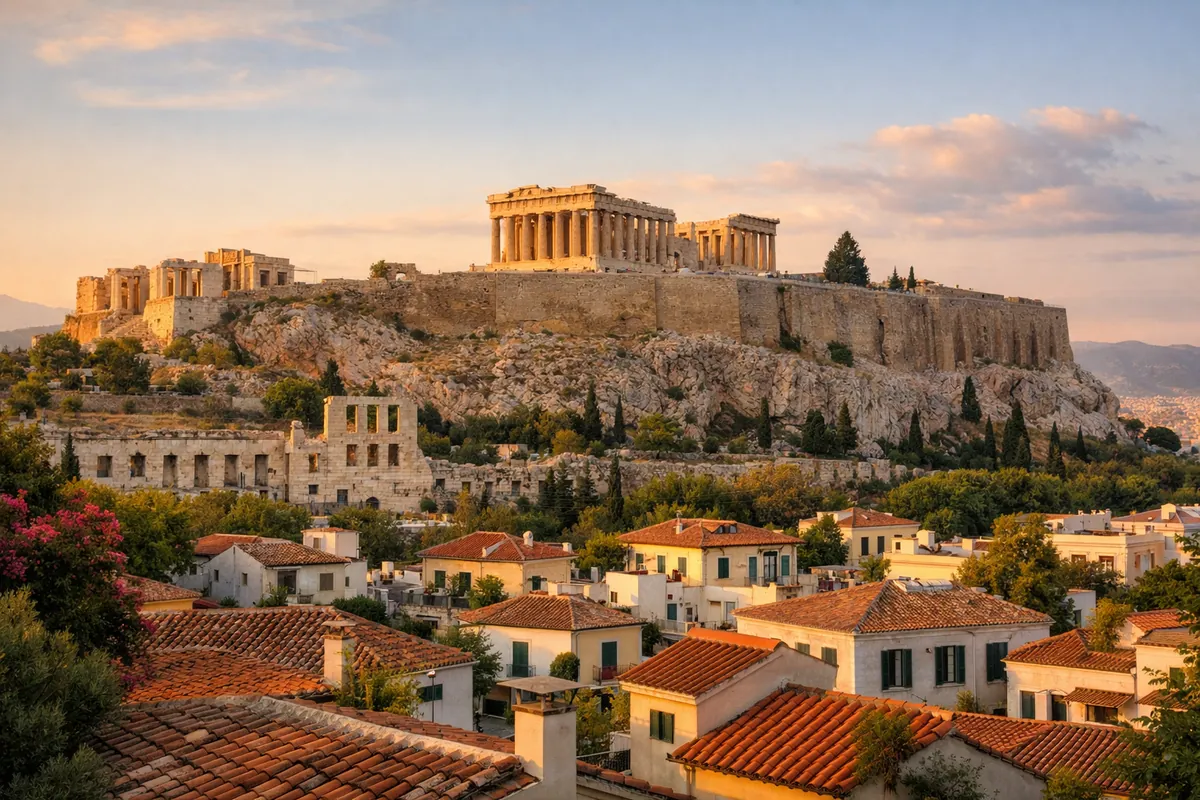
The rocky hill crowned by the Parthenon is Athens at its most iconic. Go early or later in the day if you can, as shade is limited and the views across the city are wide open.

Acropolis Museum

This modern museum at the foot of the Acropolis presents finds from the sacred hill in a clear, elegant layout. The building itself, with glass floors and sightlines towards the Acropolis, is part of the experience.

Ancient Agora

The old marketplace gives valuable context to classical Athens and feels surprisingly green. The Temple of Hephaestus here is one of the best-preserved ancient temples in Greece.

National Archaeological Museum

If you want a deeper look at Greek antiquity, this is one of the country's key museums. Highlights include finds from Mycenae, Cycladic art and striking bronze sculptures.

Mount Lycabettus

This hill offers one of the best-known panoramas over Athens, especially around sunset. You can walk up or take the funicular from the Kolonaki side.

Stavros Niarchos Foundation Cultural Center

On the southern side of the city, this contemporary cultural complex combines parkland, library and opera. It is a useful counterpoint to the ancient sites and shows a more modern face of Athens.

Practical tips for your hotel in Athens

  • In busy areas such as Monastiraki or Psirri, ask for a room at the back or on a higher floor if you are a light sleeper. Street noise and music can continue late.
  • A government accommodation charge may be collected separately by the property, so check the final booking terms before arrival.
  • Reserve major sights such as the Acropolis and the Acropolis Museum ahead of time, especially in spring, summer and school holiday periods. It makes the day much easier to plan.
  • Bring good walking shoes: pavements can be uneven, streets are often uphill and stone surfaces around archaeological sites can be slippery. You will notice it quickly.
  • Tipping is modest and informal. Leaving a small extra amount in restaurants or for good service is appreciated, but it is not as rigid as in some other countries.

Search Athens live

cyah searches live availability. Click an example or type your own request with dates and number of travellers.

FAQ about Athens

What is the best area to stay in Athens?

For a first trip, Syntagma or Plaka are usually the easiest choices because you are central and can walk to many major sights. If you want more restaurants and evening atmosphere, look at Monastiraki or Psirri. For a calmer base, Koukaki is a very good middle ground.

How do you get from the airport or main station to the centre?

From Athens International Airport, central Athens is usually around 40 to 50 minutes away by metro. Suburban rail can be useful for some destinations. From Larissa Station, you can use the metro to reach Syntagma, Monastiraki and other central neighbourhoods easily.

Can cyah find a hotel with breakfast and parking in Athens?

Yes. For example: ‘Find a hotel in Athens from 12 to 16 May for 2 people, with breakfast, parking, free cancellation and at least 4 stars.’ You can then refine the filters further and place several travel items in one cart.

How many days do you need in Athens?

Two full days cover the main classics well. With three to four days, you can move at a better pace, add more museums and include the coast or Piraeus.

Is Athens expensive for hotels?

It depends a lot on season, location and room type. Areas near the Acropolis and the most popular travel periods usually cost more, while streets a little further out often give you more choice.

Where should you stay in Athens with children?

Koukaki and Syntagma are often practical with children because many places are reachable on foot or with short metro rides. On the coast, such as in Glyfada, you may get more space and a slower pace, but you will be further from the main ancient sights.

Other destinations: Amsterdam · Barcelona · Lisbon · Paris · Rome · London · Madrid · Istanbul · New York · Vienna · Paramaribo · The Hague · Edinburgh · Florence · Lyon · Maastricht · Málaga · Miami · Milan · Nice · Porto · Rotterdam · Salzburg · Seville · Utrecht · Valencia · Venice