cyah.ai › Destinations › Lisbon

Where to stay in Lisbon: areas, tips and hotels

Lisbon is compact, atmospheric and surprisingly varied from one district to the next. You can have a great stay in many areas, but your choice really matters: flat or hilly, quiet or lively, classic hotel or small boutique base. Pick the right neighbourhood and you will be closer to the city’s viewpoints, tram routes and trains to Sintra or Cascais.

The best areas to stay in Lisbon

AreaAtmosphereBest forGetting there
Baixa and Chiadocentral and livelyfirst-time visitorsmetro Baixa-Chiado, Rossio
Alfamahistoric and romanticatmosphere and viewstram 28, Santa Apolónia
Bairro Alto and Príncipe Realnightlife and designrestaurants and eveningsRestauradores or Rato metro
Belémspacious and culturalquieter city breaktram and rail via Belém
Avenida da Liberdade and Marquês de Pombalsmart and convenientcomfort and transportmetro Marquês de Pombal, Avenida
Cais do Sodré and Santostrendy waterfront basefood and nightlifeCais do Sodré station
Lisbon, Portugal

The map only loads after you click (map data from OpenStreetMap).

The areas of Lisbon explained

1Baixa and Chiado

Baixa is the orderly downtown rebuilt after the eighteenth-century earthquake, while Chiado feels more elegant, with shops, theatres and historic cafés. You will find plenty of classic city hotels and modern stays in restored buildings. The big advantage is location, with many sights in walking distance, though the area can be busy and some rooms pick up street noise.

2Alfama

Alfama is Lisbon’s oldest district, a maze of lanes, steps, laundry lines and views over the Tagus. Stays here are often small hotels, guesthouses or stylish conversions rather than large modern properties. It is beautiful and full of character, but be ready for steep walks, cobbles and trickier access with luggage.

3Bairro Alto and Príncipe Real

Bairro Alto comes alive after dark, with bars, small restaurants and a youthful energy, while Príncipe Real feels greener and calmer. This area suits boutique hotels, design-led stays and townhouse conversions. It is ideal if food and evenings out matter, but light sleepers should choose carefully because parts of Bairro Alto stay noisy late into the night.

4Belém

Belém sits west of the centre along the river and is all about monuments, museums and broad avenues. Hotels here are often roomier and calmer, sometimes with more facilities than those in the old centre. It works well if you do not need to be in the middle of the action, though evenings are quieter and less central for restaurants.

5Avenida da Liberdade and Marquês de Pombal

Around Avenida da Liberdade you stay on a grand boulevard between the historic centre and newer districts. This is where many larger hotels, business-friendly properties and comfortable full-service options are based, with easy metro and taxi access. It feels more polished and calmer than Baixa, though less distinctive in character.

6Cais do Sodré and Santos

Cais do Sodré and neighbouring Santos are popular for their Tagus setting, strong food scene and direct train link to Cascais. You will find stylish hotels, renovated buildings and plenty of good weekend-break options. It is practical and lively, but streets near the nightlife and waterfront can be noisy at night.

Getting there

Humberto Delgado Airport is close to the city, just northeast of the centre. The red metro line gets you towards central interchange stations in about 20 to 30 minutes, while a taxi is often easier if you have heavy luggage. Key stations include Santa Apolónia and Oriente for longer-distance rail, Rossio for trains to Sintra, and Cais do Sodré for the line to Cascais.

Getting around

Lisbon is easiest to get around by metro, tram, bus, lifts, funiculars and a fair amount of walking. Contactless payment is common around the city, but for public transport a local travel card is often the simplest option. Expect hills, cobbles and steps, so choose your area carefully if you are travelling with children, a buggy or heavy bags. A car is usually more hassle than help, and parking can be awkward.

When to go

The best months are usually March to June and September to October, when it is often sunny without the full heat of high summer. July and August are busier, especially in the most popular central districts and along the coast. In June, peaking on the night of 12 to 13 June, the Festas de Lisboa and Saint Anthony celebrations bring a festive atmosphere to older neighbourhoods such as Alfama and Graça. Winters are generally mild, though rain and wind are possible.

What not to miss in Lisbon

Jerónimos Monastery

This vast monastery in Belém is one of the great landmarks of Manueline architecture and part of Portugal’s maritime story. It is within walking distance of several other major sights in the same district.

Belém Tower

The famous riverside tower is a symbol of the Portuguese Age of Discoveries. Most people come for its setting by the water as much as for the monument itself.

São Jorge Castle

High above Alfama, this castle has one of the city’s best-known panoramas. The climb itself is part of the experience, through steep streets and several miradouros on the way.

Praça do Comércio

This grand square on the river is one of the classic gateways to central Lisbon. From here you can walk straight into Baixa or along the waterfront towards Cais do Sodré.

Tram 28 and the miradouros

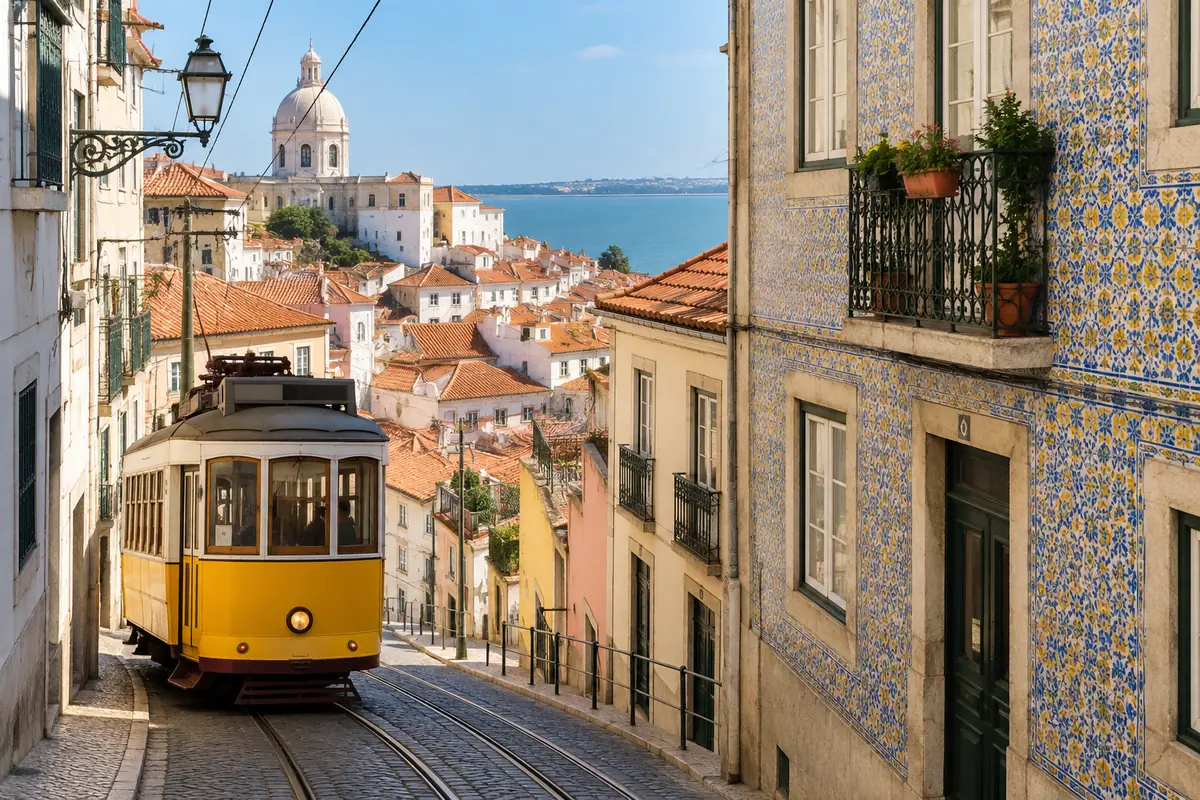
The iconic yellow tram is not just transport, it is also a good way to see older neighbourhoods. Pair it with viewpoints such as Santa Luzia or Senhora do Monte.

MAAT and Belém’s museums

Belém offers more than monuments, with strong museums including MAAT on the riverfront. That makes the district worthwhile even if you want more than the historic centre.

Practical tips for your hotel in Lisbon

  • In busy central areas, ask for a room on the quieter side or on a higher floor, especially in Baixa, Bairro Alto and Cais do Sodré. Street noise and nightlife can make a real difference.
  • Wear shoes with good grip. The limestone pavements and cobbles can be slippery, especially on slopes and after rain.
  • Reserve major sights such as Jerónimos Monastery and São Jorge Castle ahead of time when you can. It often saves waiting, particularly in busy seasons.
  • A city tax may apply and is usually handled separately by the accommodation. Also check whether your hotel has a lift, because older buildings do not always have one.
  • Tipping is not compulsory, but rounding up or leaving a little extra for good service is common. In tourist areas, keep an eye on your belongings, especially on busy trams and at viewpoints.

Search Lisbon live

cyah searches live availability. Click an example or type your own request with dates and number of travellers.

FAQ about Lisbon

Which area is best to stay in Lisbon?

Baixa and Chiado are the most convenient choice for a first visit: central, and the Baixa is fairly flat. For more atmosphere choose Alfama, and for restaurants or nightlife look at Bairro Alto, Príncipe Real or Cais do Sodré.

How do I get from Lisbon airport to the centre?

The red metro line gets you towards the centre in about 20 to 30 minutes, depending on where you get off. A taxi is useful if you arrive late or have a lot of luggage.

Can cyah combine a flight and a hotel to Lisbon?

Yes. cyah searches live hotel availability worldwide, flights and European trains, and you can place several items in one cart. You can manage or cancel through My booking.

How many days do you need in Lisbon?

Two to three days is enough for a strong first visit covering the main sights. With four days, you can explore at a slower pace and add places such as Sintra, Belém or Cascais more easily.

Is Lisbon a good city break with children?

Yes, especially if you choose a practical area such as Baixa, Chiado or Avenida da Liberdade. Just remember that hills, steps and cobbles are part of the city, so a hotel near the metro or tram helps a lot.

Where should I stay in Lisbon if I want to avoid hills?

Baixa is the flattest and easiest area on foot. Around Avenida da Liberdade and Marquês de Pombal is also more comfortable than Alfama, Graça or parts of Bairro Alto.

Other destinations: Amsterdam · Barcelona · Paris · Rome · London · Madrid · Istanbul · New York · Vienna · Paramaribo · Athens · The Hague · Edinburgh · Florence · Lyon · Maastricht · Málaga · Miami · Milan · Nice · Porto · Rotterdam · Salzburg · Seville · Utrecht · Valencia · Venice