cyah.ai › Destinations › Nice

Where to stay in Nice: areas, tips and hotels

Nice is one of those cities where beach time, city breaks and Côte d’Azur day trips fit together easily. Your area matters here: you may want to walk everywhere, stay close to restaurants in the evening, or keep the station or airport within easy reach. Pick the right base and Nice feels compact, scenic and surprisingly practical.

The best areas to stay in Nice

AreaAtmosphereBest forGetting there
Vieille Villelively, historicatmosphere and diningwalking distance to Opéra-Vieille Ville tram
Carré d’Orcentral, elegantbeach and shoppingtram at Masséna or Jean Médecin
Port de Nicelocal, relaxedquieter eveningstram at Garibaldi / Le Port
Gambetta / Musicienspractical, residentialvalue and conveniencewalking distance to Nice-Ville or Alsace Lorraine tram
Libérationlocal, authenticmarket and rail linksLibération tram, near Nice-Ville
Cimiezgreen, peacefulquiet and museumsbus connection to centre
Nice, France

The map only loads after you click (map data from OpenStreetMap).

The areas of Nice explained

1Vieille Ville

Vieille Ville is the old heart of Nice, with narrow lanes, markets, Baroque churches and plenty of terraces. You are right in the middle of the atmosphere, with easy walks to the Promenade des Anglais and Castle Hill. Hotels tend to be smaller and full of character, but rooms can be compact and evenings noisier.

2Carré d’Or

Carré d’Or sits between the seafront, Place Masséna and the main shopping streets, and it is one of the easiest areas for a first stay. You will find classic city hotels, boutique addresses and places close to the beach. The big advantage is walkability, while the trade-off is that the busiest streets stay lively into the evening.

3Port de Nice

Around the port, Nice feels less touristy and more neighbourhood-based, with strong restaurant options, wine bars and views of yachts and fishing boats. You are still within walking distance of the old town, but nights are often a little calmer. Hotel choice is smaller than in the centre, though there are appealing small hotels and aparthotels.

4Gambetta / Musiciens

West of the centre, Gambetta and Musiciens offer broad streets, residential buildings and many reliable mid-range hotels. You can usually still walk to the sea, and the station is useful for day trips to Cannes, Monaco or Antibes. The atmosphere is less distinctive than the old town, but that also makes it quieter and easier to handle.

5Libération

Libération is a real residential district north of the centre, known for the daily market around the Halles de la Libération. Staying here means bakeries, cafés and a more everyday rhythm, rather than polished resort scenery. Hotel options are more limited, but it is a smart pick if you want local life and quick station access.

6Cimiez

Cimiez sits on the hill above Nice and feels stately and calm, with villas, gardens and museums in a greener setting. It suits travellers who do not need to be by the sea and care more about space and quiet nights. Just keep in mind that the beach and evening scene are less immediate, so you will rely more on buses or taxis.

Getting there

Nice Côte d’Azur Airport is west of the city and linked to the centre by tram, with a journey of about 20 to 30 minutes depending on where you get off. Nice-Ville is the main railway station, with trains along the Côte d’Azur and towards Paris. If you arrive at Nice-Ville, you can walk or take the tram to areas such as Carré d’Or, the old town or the port.

Getting around

Nice is very manageable on foot, especially between the old town, Place Masséna, the seafront and the port. For longer hops, trams and buses are useful, and contactless payment or a local transport ticket is usually the simplest option. A car is less attractive if you are only staying in Nice, as traffic, one-way streets and parking can be a hassle, so a hotel with parking helps if you do drive.

When to go

May, June, September and early October are usually the sweetest months for a city break, with pleasant weather and plenty of street life without the peak summer intensity. July and August are hotter, busier and more beach-focused. In February, the Nice Carnival brings a big seasonal surge, and summer generally means heavier crowds along the coast and around the beaches.

What not to miss in Nice

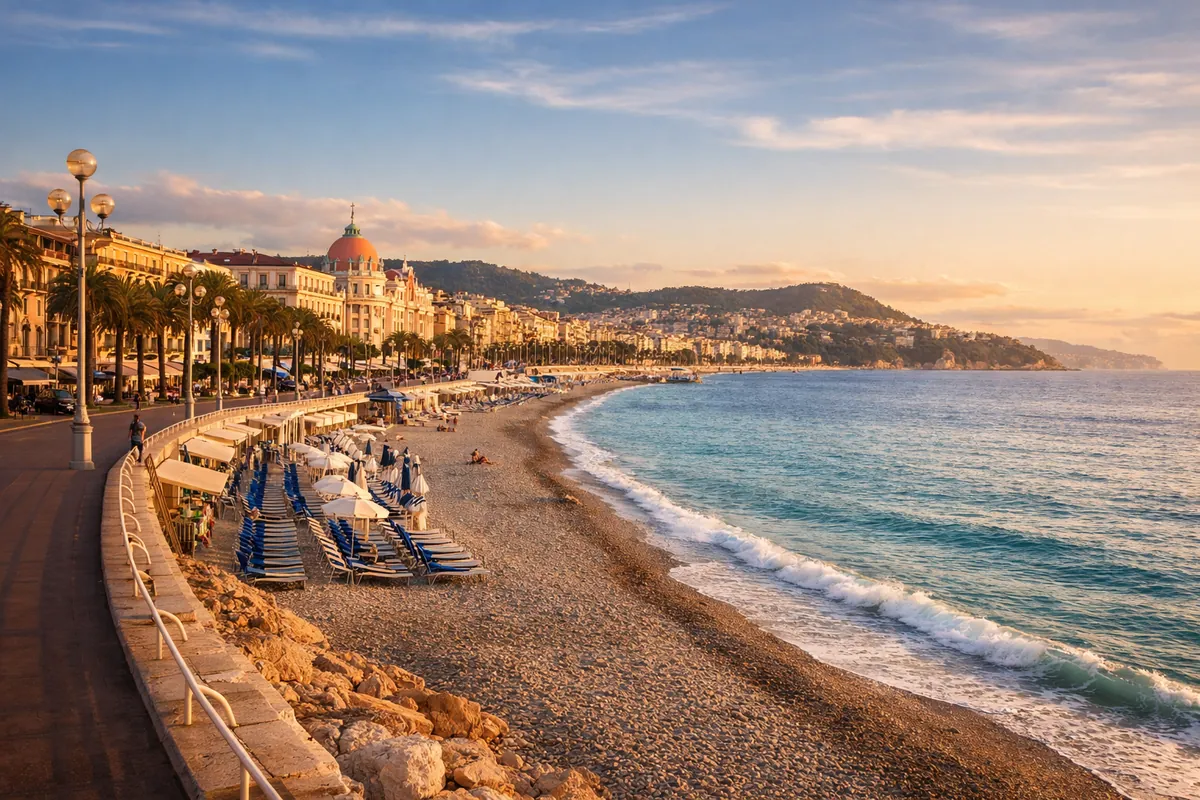
Promenade des Anglais

The city’s famous seafront promenade is ideal for walking, cycling and people-watching. It also helps you understand how Nice stretches between the beach and the urban centre.

Colline du Château

This hill between the old town and the port gives one of the best views over the Baie des Anges, the rooftops and the harbour. You go for the panorama rather than a castle, as the castle itself is long gone.

Cours Saleya

Cours Saleya is Nice’s best-known market street, in the old town near the sea. Come for flowers, regional produce and the lively backdrop of façades, shutters and café terraces.

Place Masséna

This major square links the old town with the shopping streets of newer Nice. Its red façades, fountains and tram line make it a useful and instantly recognisable meeting point.

Musée Matisse

In Cimiez, this important museum is dedicated to Henri Matisse, whose name is closely tied to Nice. It adds depth if you want the city to be more than a beach break.

Cathédrale Saint-Nicolas

This large Russian Orthodox cathedral shows how international Nice has long been. It sits a little outside the standard sightseeing route, which makes it all the more interesting to include.

Practical tips for your hotel in Nice

  • In the old town and on busier streets, noise can carry well into the evening. If possible, ask for a quieter room at the back or on a higher floor.
  • Nice has a tourist tax, and accommodation providers usually handle it separately. The amount depends on the type of stay and can change.
  • This is especially wise in spring, summer and around Carnival. Good restaurants in the old town and around the port can also fill up fast.
  • Nice looks flat at first glance, but viewpoints such as Castle Hill and districts like Cimiez involve more walking than you may expect. Old town streets can also be uneven or slippery.
  • For Nice itself, most visitors do not need one. If you are driving, use filters for parking so you do not have to sort it out on arrival.

Search Nice live

cyah searches live availability. Click an example or type your own request with dates and number of travellers.

FAQ about Nice

What is the best area to stay in Nice?

For a first visit, Carré d’Or is often the easiest choice: central, close to the sea and well connected. For more character, choose Vieille Ville, while Port de Nice or Cimiez suit quieter evenings better.

How do you get from the airport or main station to the centre?

From Nice Côte d’Azur Airport, the tram is the simplest way into the centre, usually taking about 20 to 30 minutes. From Nice-Ville, you can walk to parts of the centre or take a short tram ride towards Place Masséna or the old town.

Can cyah find a hotel with parking in Nice?

Yes. You could ask: find a hotel in Nice from 12 to 16 September for 2 people, with parking, breakfast and free cancellation. Many hotels in Nice offer parking, but spaces can be limited, so it is smart to filter and book ahead.

How many days do you need in Nice?

Two to three days is enough for the main sights in Nice itself. With four or five days, you can also add beach time and day trips along the Côte d’Azur.

Is Nice expensive for hotels?

Nice is popular, and the most central areas or places near the beach are usually in highest demand. Away from the very top locations, or a little further from the sea, you will normally find more choice.

Where should you stay in Nice with children?

Carré d’Or and parts of Gambetta are handy if you want to stay near the beach, shops and public transport without too many hills. For a quieter base, Cimiez can work well, though it is less immediate for the seafront on foot.

Other destinations: Amsterdam · Barcelona · Lisbon · Paris · Rome · London · Madrid · Istanbul · New York · Vienna · Paramaribo · Athens · The Hague · Edinburgh · Florence · Lyon · Maastricht · Málaga · Miami · Milan · Porto · Rotterdam · Salzburg · Seville · Utrecht · Valencia · Venice