cyah.ai › Destinations › Florence

Where to stay in Florence: areas, tips and hotels

Florence is compact, busy and full of atmosphere, so your base can shape the whole trip. Stay in the historic centre and you can walk to the main sights, while areas just beyond the busiest core often feel calmer and more practical. These are the smartest neighbourhoods to consider.

The best areas to stay in Florence

AreaAtmosphereBest forGetting there
Duomo & Centro Storicohistoric, livelyfirst-time visitorswalking distance to main sights
Santa Maria Novellapractical, centraltrain arrivalsby Firenze Santa Maria Novella station
San Lorenzolocal, livelymarkets and foodshort walk from SMN
Oltrarno & Santo Spiritocreative, relaxedatmosphere seekersacross the Arno, walk to centre
Santa Crocelively, culturalevenings and piazzaswalking distance to Piazza della Signoria
San Fredianotrendy, localquiet with characterwest of Oltrarno, bus or walk
Florence, Italy

The map only loads after you click (map data from OpenStreetMap).

The areas of Florence explained

1Duomo & Centro Storico

This is the heart of Florence, around the cathedral, Piazza della Signoria and a maze of narrow streets lined with churches, palaces and shops. Hotels here are mostly small city stays, classic properties and rooms in historic buildings. The big advantage is doing almost everything on foot, while the trade-off is more crowds and sometimes smaller or noisier rooms.

2Santa Maria Novella

Around Firenze Santa Maria Novella you are well placed if you are arriving by train or have an early departure. The area is still within walking distance of the historic centre and has a mix of simple hotels, reliable mid-range stays and larger city hotels. It feels more functional than romantic, but that often makes it an easy and relaxed choice.

3San Lorenzo

San Lorenzo sits between the station and the historic core, with Mercato Centrale and the Basilica di San Lorenzo as key landmarks. It suits travellers who want food halls, market stalls and plenty of casual places to eat, with hotels ranging from basic to stylish boutique stays. Expect more daytime bustle here, especially in peak season.

4Oltrarno & Santo Spirito

On the south side of the Arno, Florence feels slightly calmer and more residential, especially around Santo Spirito. You will find boutique hotels, small guesthouses and characterful stays in old houses, often with more personality than in the busiest central streets. The upside is charm and good evening atmosphere, the downside is slightly longer walks to some headline sights.

5Santa Croce

Santa Croce, east of the centre, combines major monuments with a youthful and energetic feel. Around the square and along the side streets you will find charming hotels, apartments in old buildings and smaller guesthouses. It works well if you want to stay central without sleeping right on the busiest shopping streets, though bar areas can be noisy.

6San Frediano

San Frediano, on the western side of Oltrarno, has a stronger neighbourhood feel, with craft workshops, small squares and fewer tourist-heavy streets. Accommodation tends to be small design hotels, B&Bs and stylish converted buildings. It is a good pick if you want a more local side of Florence, though the best-known sights are a little less immediate.

Getting there

Florence is served by Florence Airport, Peretola, to the north-west of the city. From there, the usual route into town is by tram, then on foot or with a short onward connection, taking about half an hour. Many international visitors also arrive via Pisa Airport and continue by train to Firenze Santa Maria Novella. That station is the city’s main rail hub and sits right by the edge of the historic centre.

Getting around

Florence is best explored on foot, as many of the main sights are close together and parts of the centre have restricted traffic. For longer distances, trams and buses are useful, and contactless payment or a local transport ticket generally works well. Having a car is rarely helpful in the centre because of traffic rules and parking, so if you are driving, choose accommodation with parking outside the busiest core.

When to go

The most pleasant months are usually April to June and September to October, when walking around the city is generally comfortable. July and August are hotter, busier and more tiring for museum-heavy days. Florence also has recurring events such as Scoppio del Carro at Easter and Festa di San Giovanni on 24 June. Public holidays and long weekends make the centre especially busy.

What not to miss in Florence

Duomo di Firenze

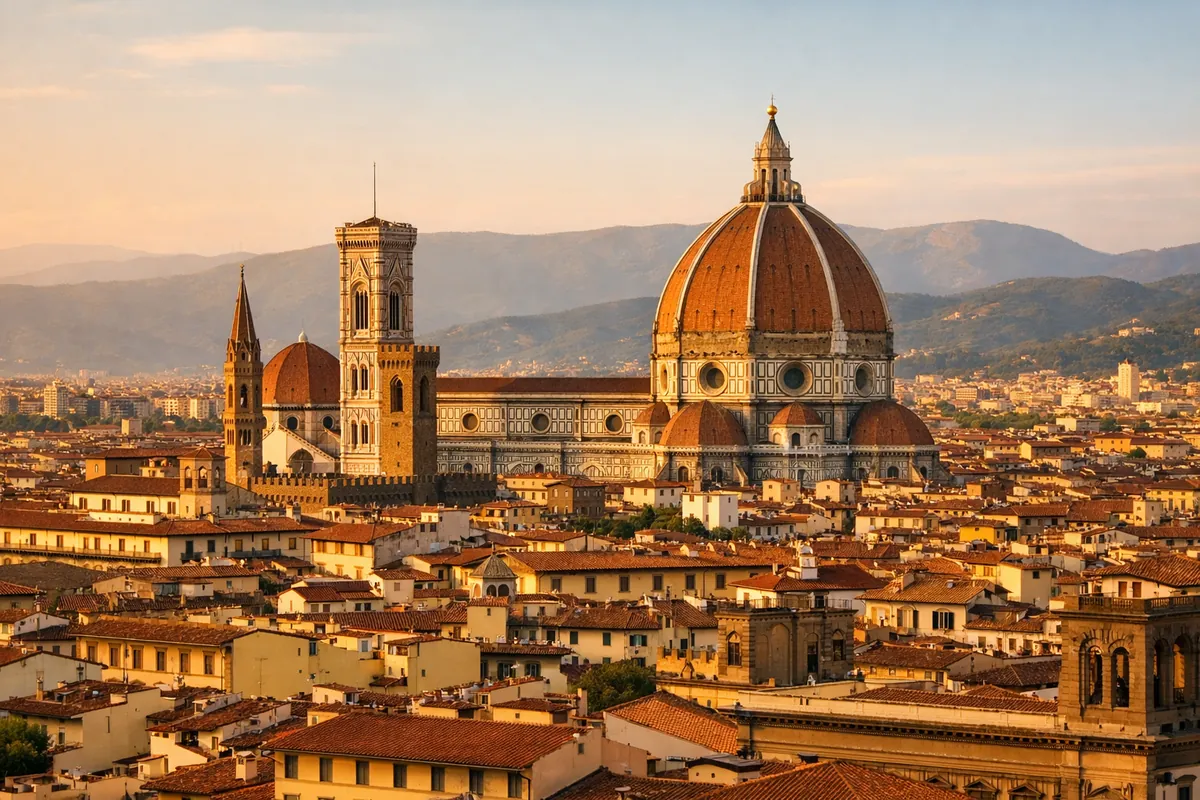
The cathedral and Brunelleschi’s dome define the city skyline. Even a walk around the surrounding streets gives you that classic Florence feeling straight away.

Galleria degli Uffizi

One of Italy’s best-known art museums, with major Renaissance works. Booking ahead is wise if you want to cut down waiting time.

Ponte Vecchio

Florence’s most famous bridge is known for the shops built along it. Early morning and sunset are especially atmospheric times to see it.

Palazzo Pitti and the Boboli Gardens

On the Oltrarno side, this grand palace and the formal gardens behind it make a rewarding mix of art, architecture and viewpoints.

Basilica di Santa Croce

This large Franciscan church is one of the city’s key monuments. The square outside is also a favourite place to pause and take in the atmosphere.

Piazzale Michelangelo

For the classic panoramic view of Florence, head to this hilltop terrace. It brings together the Arno, the dome and the rooftops in one sweeping scene.

Practical tips for your hotel in Florence

  • Many central places to stay are in old buildings, and a lift is not guaranteed. Check in advance if you are travelling with heavy luggage or prefer to avoid stairs.
  • A city tax applies in Florence and is often paid separately at the accommodation. It is worth checking how that is handled before you arrive.
  • Reserve major museums such as the Uffizi and the Accademia well ahead, especially in spring and autumn. It can save a lot of queueing time.
  • Ask for a room on the quieter side of the building if you are a light sleeper. Central streets and piazzas can stay lively well into the evening.
  • Bring a plug adapter if your chargers do not always fit Italian sockets. Many hotels are fine for charging, but older rooms do not always have many spare outlets.

Search Florence live

cyah searches live availability. Click an example or type your own request with dates and number of travellers.

FAQ about Florence

What is the best area to stay in Florence?

For a first trip, Duomo and the historic centre are the easiest because you can walk to almost everything. If you want practicality and rail access, Santa Maria Novella is a smart option. For more atmosphere and a more local feel, Oltrarno and Santo Spirito are often the most appealing.

How do you get from the airport or main station to the centre?

From Florence Airport, the usual route is by tram towards the centre, followed by a short walk or brief onward connection. From Firenze Santa Maria Novella station, you can walk to the edge of the old town in minutes and reach many central hotels in about 10 to 20 minutes.

Can cyah find a hotel with breakfast in Florence?

Yes. You could ask: 'Find a hotel in Florence with breakfast, from 12 to 15 May, for 2 people.' You can then refine with filters such as budget, stars, free cancellation or parking, and book it together with a flight or European train in one cart.

How many days do you need in Florence?

Two full days is the minimum for the major sights. Three days gives you a much better pace and time for a museum, a viewpoint and a neighbourhood such as Oltrarno.

Is Florence expensive for hotels?

Florence is popular and compact, so staying in the very centre can be relatively expensive, especially in busy months. Around Santa Maria Novella, San Lorenzo or just outside the busiest core, you will usually find a wider spread of options.

Where should you stay in Florence with children?

Santa Maria Novella is often a practical choice with children because arrival is easy, there is less walking with luggage and many sights are still close by. San Frediano or Oltrarno can also work well if you want slightly quieter nights.

Other destinations: Amsterdam · Barcelona · Lisbon · Paris · Rome · London · Madrid · Istanbul · New York · Vienna · Paramaribo · Athens · The Hague · Edinburgh · Lyon · Maastricht · Málaga · Miami · Milan · Nice · Porto · Rotterdam · Salzburg · Seville · Utrecht · Valencia · Venice