cyah.ai › Destinations › Seville

Where to stay in Seville: areas, tips and hotels

Seville is a city of orange trees, tapas bars and long evenings outdoors, but your base makes a real difference. Some areas are packed with monuments and narrow lanes, others feel quieter, more local or easier for train arrivals. Choose the right neighbourhood and you can spend more time enjoying the city, less time crossing it.

The best areas to stay in Seville

AreaAtmosphereBest forGetting there
Santa Cruzhistoric and atmosphericfirst-time visitorswalking distance to cathedral and Alcázar
El Arenalcentral and livelyfood and strollingwalk to cathedral, river and tram
Centrobusy and practicalshopping and conveniencemetro at Puerta de Jerez, many buses
Trianalocal and characterfulauthentic atmosphereacross the bridge from centre, buses
Alameda de Hérculescreative and relaxedbars and nightlifebuses, walk to old centre
Macarenalocal and practicalquieter staysbus to centre, walk to Alameda
Seville, Spain

The map only loads after you click (map data from OpenStreetMap).

The areas of Seville explained

1Santa Cruz

Santa Cruz is the classic choice, a maze of narrow streets, small squares and old houses right in the historic core. This is where you will find many boutique hotels and characterful stays in restored buildings. The big advantage is doing almost everything on foot, though it can feel busy and taxis cannot always reach every doorstep.

2El Arenal

El Arenal sits between the cathedral and the Guadalquivir, with a slightly more open feel than Santa Cruz. It works well for tapas, evening walks by the river and easy access to the main sights. Hotels range from traditional city stays to solid mid-range options, though streets around popular dining areas can be noisy.

3Centro

For many travellers, Centro means the wider central area around shopping streets, plazas and major avenues. Stay here if you want shops, restaurants, landmarks and plenty of hotel choice close together. It is less romantic than Santa Cruz, but often more practical if you are arriving with luggage or like a lively city atmosphere.

4Triana

Triana, across the river, has a strong identity of its own and is closely linked with ceramics, flamenco and everyday neighbourhood life. It is often calmer at night than the old centre, with smaller hotels and apartment-style stays on residential streets. The trade-off is crossing the river for the headline sights, though that is usually a pleasant walk.

5Alameda de Hércules

Around Alameda de Hércules you are in a younger, looser part of Seville with lots of terraces, bars and a more alternative feel. Expect boutique stays, guesthouses and smaller hotels, often with a contemporary style. It is a good fit if you like going out in the evening, less so if you want especially quiet surroundings.

6Macarena

Macarena, north of the historic core, feels more residential and less tourist-focused. You will often find larger hotels and practical bases here, sometimes useful if you are driving or do not want to sleep in the thick of the crowds. The downside is a longer journey to the top sights than from the most central districts.

Getting there

Seville is mainly served by Seville Airport, east of the city. From the airport, buses and taxis usually reach the centre in about 20 to 30 minutes, depending on traffic and your hotel location. If you arrive by rail, you will normally use Sevilla Santa Justa, the city’s main station for high-speed and other train services. From there, Centro, Santa Cruz and El Arenal are a short taxi or bus ride away.

Getting around

The historic centre is compact, so you can cover a lot on foot. For longer journeys, buses, the tram and the metro are useful; check current ticket options for each mode, as payment methods vary. Driving is rarely ideal if you are staying in the old centre: streets are narrow, one-way systems are common and parking can be limited. If you need a car, look for a hotel with parking.

When to go

Spring and late autumn are usually the most comfortable times to visit, with plenty of sunshine and less intense heat than midsummer. July and August can be very hot, so a hotel with a pool or strong air conditioning can make a real difference. Semana Santa and the Feria de Abril bring a distinctive atmosphere and major cultural interest, but they also mean larger crowds and hotels booking up early.

What not to miss in Seville

Seville Cathedral

One of the world’s largest Gothic cathedrals, filled with grand chapels and layers of history. The Giralda, once a minaret, is part of the complex and gives one of the city’s best-known views.

Real Alcázar

This royal palace complex mixes Islamic, Gothic and Renaissance influences with gardens full of water, shade and detail. Book well ahead, as it is one of Seville’s most popular sights.

Plaza de España

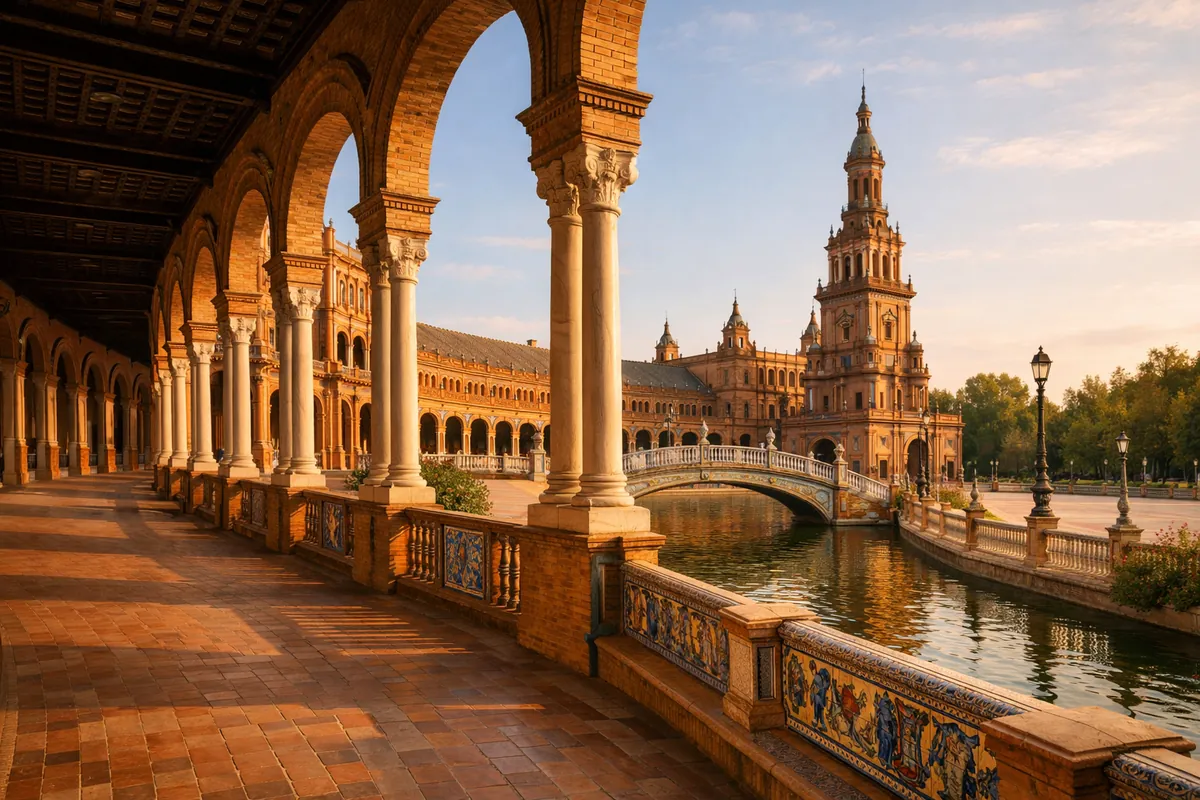
A monumental semi-circular square in Parque de María Luisa, known for its bridges, tiled alcoves and wide walking space. It is especially pleasant early in the day or later in the afternoon.

Metropol Parasol

This striking modern wooden structure on Plaza de la Encarnación offers a sharp contrast to the old city around it. The area below is lively and useful for shops, market browsing and lunch.

Barrio de Santa Cruz

Even if you do not stay here, it is worth wandering for its lanes, patios and intimate squares. This is Seville at its most atmospheric, full of shade, tiles and unexpected corners.

Torre del Oro and the river

The Guadalquivir is ideal for an evening walk, especially around sunset. Torre del Oro is a recognisable landmark and the riverfront gives the city some welcome breathing room.

Practical tips for your hotel in Seville

  • Check how accessible your hotel is if you are arriving by car or taxi. In parts of Santa Cruz and the old centre, vehicles cannot always stop directly outside.
  • Reserve major sights such as the Alcázar well in advance, especially in spring and around festival periods. It makes the trip much smoother.
  • Ask for a quiet room if you are a light sleeper. In central areas, terraces, late dinners and street noise can continue well into the evening.
  • In warmer months, proper air conditioning is worth checking before you book. In older buildings, room layouts vary a lot and not every room feels equally bright or spacious.
  • Spain uses the same plug types as the Netherlands and most of Europe, so you will not usually need an adapter. Tipping is appreciated, but not as automatic as in some other countries.

Search Seville live

cyah searches live availability. Click an example or type your own request with dates and number of travellers.

FAQ about Seville

What is the best area to stay in Seville?

For a first trip, Santa Cruz is often the easiest choice because you are surrounded by the main sights. If you prefer somewhere more local and a little calmer, consider Triana or Macarena.

How do you get from the airport or main station to the centre?

From Seville Airport, buses and taxis usually take about 20 to 30 minutes to reach central areas. From Sevilla Santa Justa, a short taxi or bus ride gets you to Centro, Santa Cruz or El Arenal.

Can cyah find a hotel with a pool in Seville?

Yes. For example, you could ask: ‘Find a hotel with a pool in Seville from 12 to 16 May for 2 people.’ Cyah searches live hotel availability worldwide, and you can also use filters such as breakfast, parking, budget, stars and free cancellation.

How many days do you need in Seville?

Two full days covers the main highlights, but three days feels more relaxed. That gives you time for the major monuments, a slower evening in Triana and a museum or long lunch without rushing.

Is Seville expensive for hotels?

It depends a lot on the season, the exact area and major festival periods. During busy spring dates and big events, demand rises sharply, while quieter weeks usually give you more choice.

Where should you stay in Seville with children?

El Arenal and parts of Centro are often practical with children because the terrain is fairly easy and many sights are close together. A hotel with a family room, pool or breakfast can be especially helpful in warmer weather.

Other destinations: Amsterdam · Barcelona · Lisbon · Paris · Rome · London · Madrid · Istanbul · New York · Vienna · Paramaribo · Athens · The Hague · Edinburgh · Florence · Lyon · Maastricht · Málaga · Miami · Milan · Nice · Porto · Rotterdam · Salzburg · Utrecht · Valencia · Venice