cyah.ai › Destinations › Rome

Where to stay in Rome: areas, tips and hotels

Rome is the kind of city where you walk all day and still feel you have only scratched the surface. Most headline sights are in and around the historic centre, but each neighbourhood has a different rhythm. Choose not just by distance to attractions, but by evenings out, noise levels, transport links and how much uphill walking you are happy with.

The best areas to stay in Rome

AreaAtmosphereBest forGetting there
Centro Storicoclassic, livelyfirst-time visitorswalking distance to Pantheon and Piazza Navona
Montitrendy, compactwalkable city breaksCavour metro, walking distance to the Colosseum
Trastevereatmospheric, livelyfood and eveningstram and bus, across the Tiber from the centre
Pratiquiet, polishedVatican and calmOttaviano and Lepanto metro
Termini / Esquilinopractical, mixedtrain arrivalsTermini station, metro A and B
Trevi / Via Venetocentral, elegantclassic Rome feelwalking distance to Trevi Fountain, Barberini metro
Rome, Italy

The map only loads after you click (map data from OpenStreetMap).

The areas of Rome explained

1Centro Storico

This is the Rome of baroque squares, fountains and narrow lanes, roughly around the Pantheon, Piazza Navona and Campo de’ Fiori. It is superb for walking, popping back to your hotel during the day and lingering outside after dark. Expect mostly small to mid-sized hotels in historic buildings, plus crowds, strong demand and some late-night noise.

2Monti

Monti sits between Termini and the Colosseum and feels more creative and less formal than the monumental centre. You will find boutiques, wine bars, quieter corners and many places to stay in townhouses or small hotels. It works well if you want both ancient Rome and easy station access, though some streets are hilly and rooms can be compact.

3Trastevere

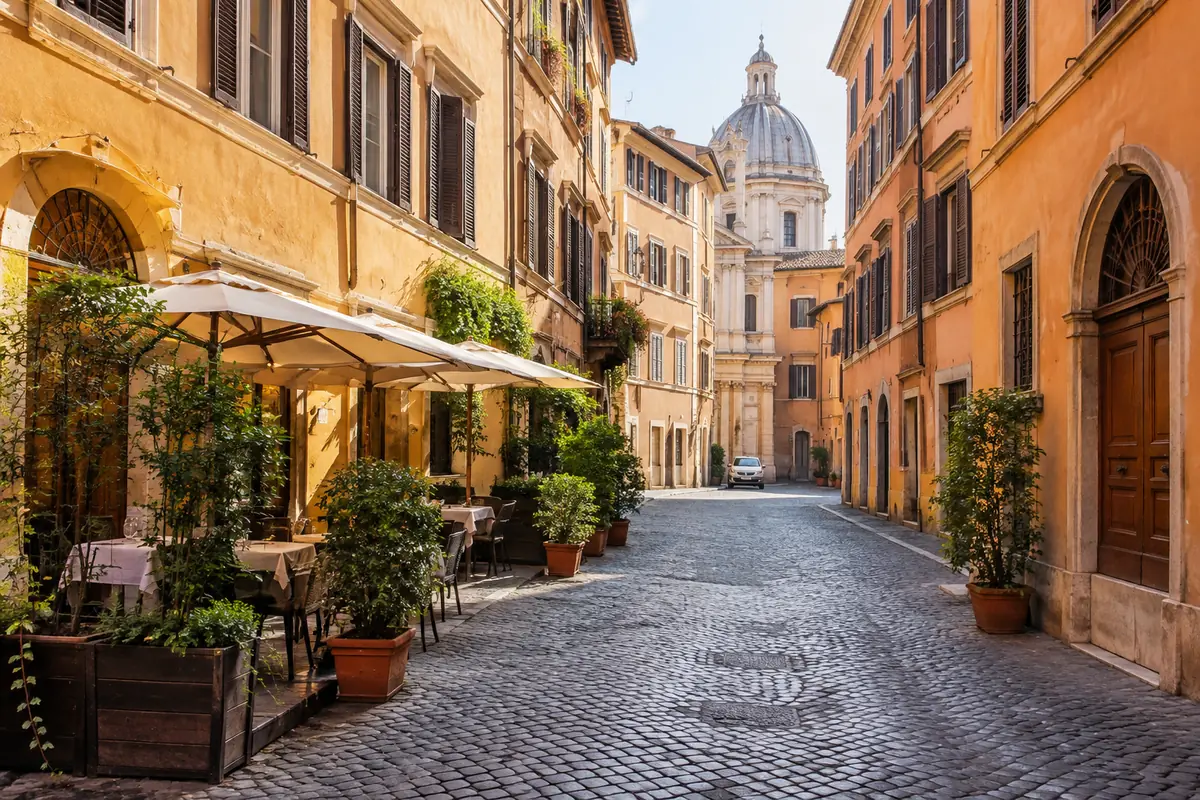
Trastevere is loved for its ochre facades, church squares and restaurants that stay busy into the evening. By day it is photogenic and relaxed, by night it becomes one of Rome’s liveliest districts, especially around Piazza di Santa Maria in Trastevere. There are many charming small hotels and guesthouses, but expect cobbles, less metro coverage and more noise if you stay right in the busiest lanes.

4Prati

Prati, just northeast of Vatican City, has broad streets, handsome apartment blocks and a tidier, less touristy feel. You can walk to St Peter’s Basilica and the Vatican Museums, while the centre is still easy to reach. Hotels here are often a little roomier and more practical, though the area can feel less dramatic than the oldest parts of Rome.

5Termini / Esquilino

Around Termini, the main advantage is convenience: early arrivals, late departures, rail trips to other Italian cities and fast metro access. The area is mixed, with simple hotels, business-style options and a multicultural food scene towards Esquilino. Not every street feels equally appealing, so the exact location matters more here than in some other neighbourhoods.

6Trevi / Via Veneto

Between the Trevi Fountain, Piazza Barberini and Via Veneto, you stay very centrally with many major sights within walking distance and a more traditional hotel district than around the Pantheon. You will find larger city hotels alongside historic addresses. It is a strong choice if you want comfort and a central base, though traffic and crowds are part of the deal.

Getting there

Rome has two airports. From Fiumicino, the most straightforward rail link is the Leonardo Express to Termini, while regional trains and road transport are also available. From Ciampino, travellers usually continue by bus towards Termini or use road transport into the city. Termini is Rome’s main railway station and the hub for high-speed services to other Italian cities. From there, many central neighbourhoods are about 10 to 20 minutes away.

Getting around

Walking is often the most efficient way to get around Rome, especially in Centro Storico, Monti and parts of Prati. The metro network is limited but useful for longer hops, while buses and trams cover the gaps. Contactless payment is widely used on public transport, though having a back-up ticketing option can be helpful. A car is usually more trouble than it is worth because of traffic, restricted traffic zones and parking difficulties.

When to go

The best periods are usually April, May, late September and October, when temperatures are often comfortable for long days on foot. July and August are hot and busy, with warmer nights and a greater need for air conditioning. Around Easter, Rome can be especially crowded, particularly near the Vatican. December has a festive atmosphere and decorations, but shorter days and cooler weather.

What not to miss in Rome

Colosseum

Rome’s most famous amphitheatre stands on the edge of the ancient centre. It makes sense to pair it with the Roman Forum and Palatine Hill next door.

Pantheon

This nearly two-thousand-year-old temple is one of the best preserved buildings of ancient Rome. The square outside is also a useful point of reference if you stay centrally.

Trevi Fountain

The Trevi Fountain is part of any first Rome trip, though it is rarely quiet. Go early or later in the evening if you want a little more space.

Vatican Museums and Sistine Chapel

A vast museum complex with major works from classical antiquity and the Renaissance, ending at the Sistine Chapel. Reserve well ahead if it is high on your list.

St Peter’s Basilica

The basilica in Vatican City is striking both outside and inside. Prati is particularly handy if you want to be nearby early in the day or return to the area later.

Piazza Navona

One of Rome’s finest baroque squares, full of fountains, terraces and street life. From Centro Storico you can easily pass through several times a day.

Practical tips for your hotel in Rome

  • A city tax applies and is usually paid separately at the accommodation. It is worth checking the payment method before you travel.
  • In busy areas such as Trastevere, Trevi and around Campo de’ Fiori, ask for a quiet rear-facing room if you are a light sleeper. Historic buildings can be charming but less soundproof.
  • Reserve high-demand sights such as the Vatican Museums and the Colosseum well ahead, especially in spring, autumn and around public holidays. It can save a lot of waiting.
  • Bring comfortable shoes. Cobbles, uneven pavements, bridges and long walking days are simply part of Rome.
  • Tipping does not need to be elaborate. Rounding up or leaving a small extra amount for good service is normal, but not obligatory.

Search Rome live

cyah searches live availability. Click an example or type your own request with dates and number of travellers.

FAQ about Rome

Which area is best to stay in Rome?

It depends on your trip. Centro Storico is the easiest base for a first visit, Trastevere suits atmosphere and evenings out, Prati works well for a calmer stay near the Vatican, and Monti is great if you want somewhere central with a more local feel.

How do I get from Fiumicino to central Rome?

The simplest train option is the Leonardo Express to Termini. You can also use regional trains or road transport, depending on exactly where your hotel is.

Can cyah find a hotel near the Vatican?

Yes. You can search Rome and filter by neighbourhood, budget, star rating, breakfast, parking, pool or free cancellation. You can book several items in one cart and later manage or cancel through My booking.

How many days do you need in Rome?

Three full days is a good minimum for the main sights. With four or five days, you can pace things better, take longer lunches and explore areas such as Trastevere or Prati in more depth.

Is Termini a good area to stay in?

Yes, if convenience matters most for trains, airport arrivals or a short break. Just pay attention to the exact street, because the atmosphere varies more here than in Prati or Centro Storico.

Where should you stay in Rome with children?

Prati and parts of Trevi or Monti are often practical because they are relatively calm but still central. Look for a lift, air conditioning, family rooms and not too many stairs, as older buildings do not always have them.

Other destinations: Amsterdam · Barcelona · Lisbon · Paris · London · Madrid · Istanbul · New York · Vienna · Paramaribo · Athens · The Hague · Edinburgh · Florence · Lyon · Maastricht · Málaga · Miami · Milan · Nice · Porto · Rotterdam · Salzburg · Seville · Utrecht · Valencia · Venice