cyah.ai › Destinations › Milan

Where to stay in Milan: areas, tips and hotels

Milan is much more than a fast-moving fashion and business city. It works brilliantly for major art, grand piazzas, aperitivo by the canals and neighbourhoods with very different moods, from polished and classic to creative and local. Choose your area carefully, because the city is walkable in parts, yet each district gives your stay a distinct feel.

The best areas to stay in Milan

AreaAtmosphereBest forGetting there
Centro Storicoclassic, livelyfirst-time visitorswalking distance to Duomo, Duomo metro
Breraelegant, culturalatmosphere and walkingLanza or Montenapoleone metro
Porta Romanalocal, relaxedlonger staysPorta Romana metro
Naviglisocial, creativenightlife and aperitivotram links, Porta Genova metro
Porta Garibaldi & Isolamodern, hipdesign and foodMilano Porta Garibaldi station, Garibaldi metro
Porta Veneziadiverse, livelyfood and art nouveauPorta Venezia metro
Milan, Italy

The map only loads after you click (map data from OpenStreetMap).

The areas of Milan explained

1Centro Storico

Around the Duomo, Galleria Vittorio Emanuele II and Via Torino, you are in the best-known part of Milan. Hotels here tend to be stylish city bases, historic addresses and polished modern options. The big advantage is doing so much on foot, while the downside is constant crowds and some street-facing rooms can be noisy.

2Brera

Brera feels refined and almost village-like within the city, with narrow streets, galleries, restaurants and handsome façades. Hotels are often smaller, smart or design-led, with a few more luxurious choices. It is ideal if you enjoy evening strolls, though less convenient if you are driving or want lots of space.

3Porta Romana

South of the centre, Porta Romana has a residential feel with cafés, good places to eat and a more everyday Milanese rhythm. You will find a mix of reliable mid-range hotels, aparthotels and practical city-break stays. It is calmer than the centre, yet still well connected to the main sights.

4Navigli

Navigli is all about the canals, terraces and lively evening scene. By day it is photogenic and easy-going, by night it gets busier with bars and restaurants, so boutique hotels and trendier stays suit the area well. It is a good choice for atmosphere, less so if you want very quiet nights.

5Porta Garibaldi & Isola

This is modern Milan, with high-rises, Bosco Verticale, smart bars and plenty of places to eat. Expect business hotels, sleek design properties and handy options close to the station. It suits travellers arriving by rail or those who prefer a contemporary district, though it lacks some of the old-world feel of the historic centre.

6Porta Venezia

Porta Venezia is an energetic district of broad streets, liberty architecture, shopping and a strong restaurant scene. Hotel choices range from simpler city stays to stylish addresses in characterful buildings. It is practical for both the centre and Milano Centrale, although traffic noise can carry on some streets.

Getting there

Milan is served by three airports: Malpensa, Linate and Bergamo Orio al Serio. From Malpensa, trains reach central Milan in about 50 minutes, Linate is the closest airport and connects quickly by metro or bus, and Bergamo usually takes longer by coach or a bus-and-train combination. The main rail stations are Milano Centrale, Porta Garibaldi and Cadorna, all with straightforward links to the metro and tram network.

Getting around

Milan is easier to explore on foot than many first-time visitors expect, especially between the Duomo, Brera, the fashion district, Porta Venezia and parts of Navigli. For longer distances, the metro, trams and buses are efficient, with contactless payment widely useful for simple journeys. A car is rarely worth it, because traffic is heavy, parking is awkward and parts of the centre restrict vehicle access.

When to go

The most pleasant months are usually April to June and September to October, when walking around is generally comfortable. July and August can be hot and sticky, while winter is cooler and can feel grey. During Fashion Week periods and Salone del Mobile in April, the city is notably busier, and the run-up to Christmas also brings heavier crowds in central shopping areas.

What not to miss in Milan

Duomo di Milano

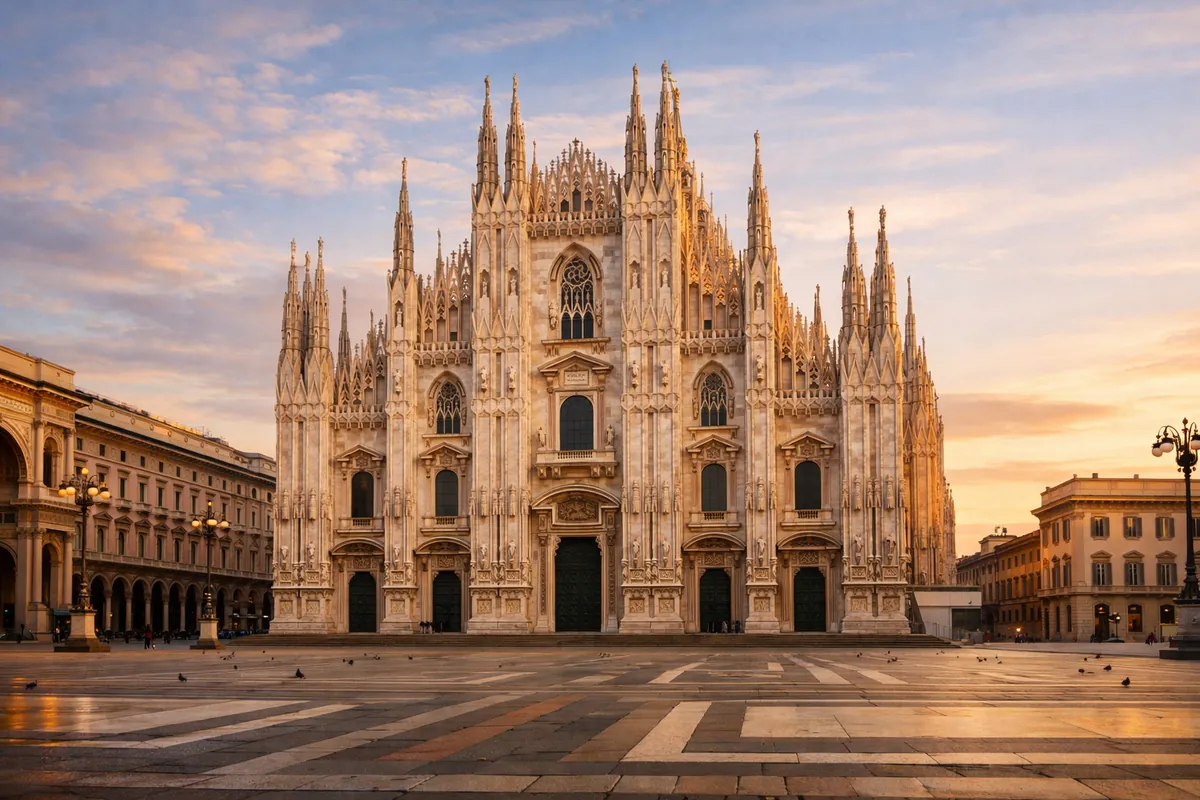
The Gothic cathedral is the city’s defining landmark and the focal point of central Milan. Even the square is impressive, and the roof is famous for its spires and sweeping views.

Galleria Vittorio Emanuele II

This 19th-century arcade beside the Duomo is an architectural icon, with glass vaulting, mosaic floors and historic cafés. It is one of the best places to absorb old Milanese grandeur.

Teatro alla Scala

La Scala is one of Europe’s most famous opera houses and deeply tied to Italy’s musical history. Even without a performance, the setting is worth seeing.

Pinacoteca di Brera

In Brera, this is one of Italy’s leading art museums, with works by artists including Mantegna, Caravaggio and Raphael. The surrounding neighbourhood makes a visit even more appealing.

Santa Maria delle Grazie

This church and convent complex is best known for Leonardo da Vinci’s The Last Supper. Visits are often arranged well ahead, so planning matters.

Castello Sforzesco

This large Renaissance castle west of the centre houses museums and stands beside Parco Sempione. It is a good place to combine city sightseeing with green space.

Practical tips for your hotel in Milan

  • A tourist tax may apply and is often paid at the accommodation.
  • Book major sights such as The Last Supper well ahead. Central hotels also fill quickly during trade fairs and fashion periods.
  • If you are a light sleeper, ask for a room facing an inner courtyard or on a higher floor. Street noise can be noticeable in Centro Storico, Navigli and along tram routes.
  • A small service or cover charge is common in restaurants. Extra tipping is welcome but usually modest rather than expected.
  • Milan is generally straightforward for visitors, but as in any big city, watch for pickpockets around busy metro stations, the Duomo area and on trams.

Search Milan live

cyah searches live availability. Click an example or type your own request with dates and number of travellers.

FAQ about Milan

What is the best area to stay in Milan?

For a first trip, Centro Storico is the easiest base because you are close to the Duomo and many major sights. For more atmosphere, many travellers prefer Brera or Navigli, while Porta Garibaldi suits those who want modern Milan and strong rail connections.

How do you get from the airport or main station to the centre?

From Linate, the city is quick to reach by metro or bus. From Malpensa, most visitors take the train into town, while Bergamo usually involves a coach or a bus-and-train combination. If you arrive at Milano Centrale, the metro gets you to the Duomo area in a short time.

Can cyah find a hotel with breakfast and free cancellation in Milan?

Yes. For example: ‘Find a hotel in Milan from 12 to 15 September for 2 people, with breakfast and free cancellation.’ You can then refine the search with filters such as budget, stars, parking or a pool.

How many days do you need in Milan?

Two full days cover the main classics such as the Duomo, Brera and Navigli. With three days, you can add museums, design-focused stops and a more relaxed pace.

Is Milan expensive for hotels?

Milan often leans expensive, especially in central neighbourhoods and during fashion weeks or major fairs. Staying just outside the very centre or booking earlier usually gives you more choice.

Where should you stay in Milan with children?

Porta Romana and parts of Porta Venezia are often good options because they feel a little calmer while staying well connected. Look for family rooms, lift access and easy metro links.

Other destinations: Amsterdam · Barcelona · Lisbon · Paris · Rome · London · Madrid · Istanbul · New York · Vienna · Paramaribo · Athens · The Hague · Edinburgh · Florence · Lyon · Maastricht · Málaga · Miami · Nice · Porto · Rotterdam · Salzburg · Seville · Utrecht · Valencia · Venice