cyah.ai › Destinations › New York

Where to stay in New York: areas, tips and hotels

New York is vast, varied and highly neighbourhood-driven. Where you stay shapes the whole trip: classic and bright in Midtown, more historic and calmer downtown, or creative and local across parts of Brooklyn. Pick your base not just by hotel style, but by atmosphere, travel time and what you want outside the door at night.

The best areas to stay in New York

AreaAtmosphereBest forGetting there
Midtownbusy, iconicfirst-time visitorsaround Penn Station, Grand Central and many subway lines
Lower Manhattanhistoric, businesslikedowntown sightsFulton Center, World Trade Center, multiple subway lines
SoHo and Greenwich Villagestylish, livelyfood and atmospheresubway around Canal St, Spring St, W 4 St
Williamsburg (Brooklyn)creative, localBrooklyn and skyline viewsL, J/M/Z, G subway and NYC Ferry
Upper West Sideresidential, relaxedfamilies and park accesssubway 1, 2, 3, B, C
Chelsea and Meatpacking Districttrendy, urbanrestaurants and galleriessubway A/C/E, L, 1/2/3, walking distance to the High Line
New York, United States

The map only loads after you click (map data from OpenStreetMap).

The areas of New York explained

1Midtown

Midtown is the classic New York of Times Square, Broadway, Fifth Avenue and the Empire State Building. There is a huge spread of hotels here, from compact business stays to larger chain properties, and transport is easy in almost every direction. It is practical and central, but also crowded, bright and noticeably touristy in places.

2Lower Manhattan

Lower Manhattan works well if you want to be close to Wall Street, the 9/11 Memorial, One World and ferries towards Liberty Island. It often feels calmer in the evening than Midtown, with modern hotels mixed among office buildings. The trade-off is longer journeys to Uptown, Central Park and many major museums.

3SoHo and Greenwich Village

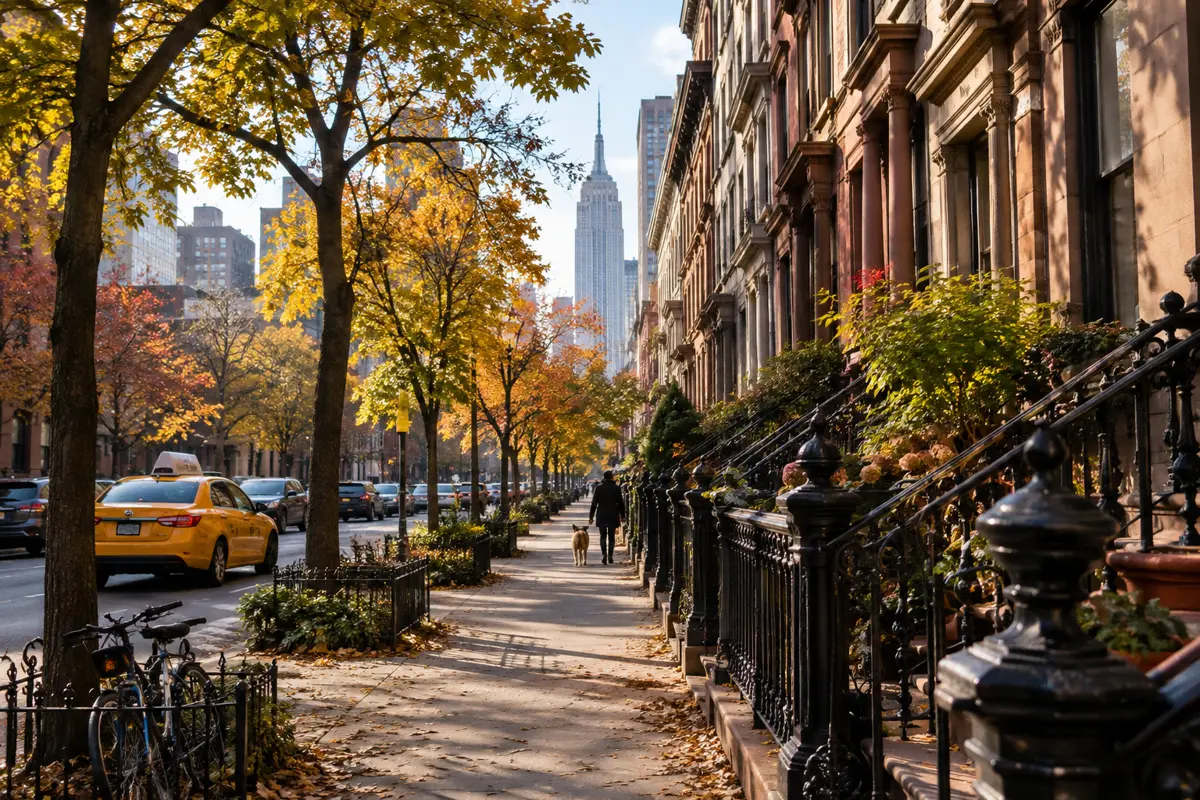
SoHo and Greenwich Village are popular for lower-rise streets, shopping, cafés, jazz, restaurants and a more characterful Manhattan feel. You stay among boutiques, brownstones and smaller design-led hotels rather than around big towers. It is atmospheric and sociable, though less ideal if you want a large traditional hotel with lots of facilities.

4Williamsburg (Brooklyn)

Williamsburg suits travellers who want a different side of New York, with cafés, bars, converted warehouses, waterfront parks and strong skyline views. Manhattan is easy to reach by subway, but the mood is more local than in Midtown. A strong choice for repeat visitors, couples and anyone wanting evenings away from office districts.

5Upper West Side

The Upper West Side sits between Central Park and Riverside Park and feels classic, residential and relatively easy-going. You are close to the American Museum of Natural History and the streets are calmer than Midtown, with a mix of polished hotels and apartment-style stays. It is especially handy for families, though less focused on downtown nightlife.

6Chelsea and Meatpacking District

Chelsea and the Meatpacking District combine galleries, strong dining, the High Line and the market area around Chelsea Market. Hotels here often lean modern and design-conscious, and you can walk to Hudson Yards, Greenwich Village and western Midtown. It is a good fit if you want a stylish base, though some blocks are livelier than others at night.

Getting there

New York is served by three main airports. From JFK, most travellers connect by AirTrain to the subway or the Long Island Rail Road into Manhattan. From Newark Liberty, the AirTrain links with NJ Transit trains towards Penn Station. LaGuardia is the closest to Manhattan and is mainly connected by bus and taxi. If you arrive by rail, Penn Station is the main intercity hub; Grand Central mainly serves commuter lines.

Getting around

The subway is the backbone of getting around New York and it continues late and overnight, although not every route is equally quick at all hours. Contactless payment is widely useful, and buses help for cross-town journeys. Manhattan is very walkable within each neighbourhood, but distances between neighbourhoods are often larger than they look on a map. A car is usually more trouble than help because of traffic and parking constraints.

When to go

Spring and autumn are generally the most comfortable times to visit, roughly April to June and September to early November. These months are best for walking-heavy days. Summer can be hot and humid, while January and February can feel sharply cold. December is festive, with decorated shop windows, ice rinks and holiday lights. Expect busier periods around Thanksgiving, Christmas and the New York City Marathon in early November.

What not to miss in New York

Statue of Liberty and Ellis Island

These symbols of arrival and immigration sit in the harbour south of Manhattan. Even if you do not take the boat over, the views from Battery Park and the Staten Island Ferry are memorable.

Central Park

Central Park is far more than a city park, it is a vast green grid of lakes, bridges, playgrounds and broad walking paths in the middle of Manhattan. It is especially welcome as a break from the city's pace.

The Metropolitan Museum of Art

The Met on the eastern edge of Central Park is one of the world's major art museums. Give it time, or choose a few sections in advance so the scale does not become overwhelming.

9/11 Memorial & Museum

On the site of the former World Trade Center, the memorial's twin reflecting pools are powerful and moving. The museum adds context and is often one of the most affecting visits in the city.

Brooklyn Bridge

Brooklyn Bridge is both a landmark and one of the city's great walks between Manhattan and Brooklyn. Go early or later in the day for more space and softer light.

Broadway

For many visitors, a Broadway night is part of the New York experience. The theatre district is centred around Times Square, but the show itself is usually the real highlight.

Practical tips for your hotel in New York

  • Book popular museums, observation decks and Broadway shows ahead of time, especially for weekends and school holiday periods. It usually means shorter waits and better choice.
  • If you are a light sleeper, ask for a quiet room when booking. Street noise, sirens and lift placement can make a real difference in New York, even within the same hotel.
  • Tipping is customary in restaurants and for some services. Keep that in mind in your daily budget, even when it is not obvious from a menu.
  • Power sockets differ from those in Europe, so bring a travel adaptor. It is also worth checking whether your accommodation has enough standard or USB charging points.
  • Many travellers to the United States need an approved ESTA. Sort that out well before departure and check your passport validity too.

Search New York live

cyah searches live availability. Click an example or type your own request with dates and number of travellers.

FAQ about New York

Where is the best area to stay in New York?

For a first trip, Midtown is the easiest base because it is central and extremely well connected. If you want more atmosphere and less of a business-district feel, look at SoHo, Greenwich Village, Chelsea or parts of Brooklyn instead.

How do I get from JFK to Manhattan?

The most common options are the AirTrain with a change to the subway or the Long Island Rail Road. A taxi or car ride is simpler with luggage, but journey times vary a lot with traffic.

Can cyah compare flights to New York?

Yes. cyah searches live flights, hotel availability worldwide and European trains, and you can use filters or pay for several items together in one cart. Afterwards, you can manage or cancel through My booking.

How many days do you need in New York?

Three full days covers many of the big sights, but five to seven days gives you more room for museums, neighbourhoods and a less rushed pace. The city quickly feels bigger once you explore beyond Midtown.

Is it a good idea to stay near Penn Station?

Yes, especially if you are arriving by train or want simple transport links. It is practical and well connected, although some travellers prefer a more characterful area for evening walks and restaurants.

Where should you stay in New York with children?

The Upper West Side is often a very good fit thanks to Central Park, broader pavements and a calmer residential feel. Midtown also works well for shorter trips focused on major sights with minimal travel time.

Other destinations: Amsterdam · Barcelona · Lisbon · Paris · Rome · London · Madrid · Istanbul · Vienna · Paramaribo · Athens · The Hague · Edinburgh · Florence · Lyon · Maastricht · Málaga · Miami · Milan · Nice · Porto · Rotterdam · Salzburg · Seville · Utrecht · Valencia · Venice