cyah.ai › Destinations › Madrid

Where to stay in Madrid: areas, tips and hotels

Madrid suits a city break where you do a lot on foot: major museums, squares, parks and café-filled districts sit surprisingly close together. The city feels late, sociable and street-focused, so where you stay mainly comes down to whether you want culture, nightlife, quieter elegance or easy rail access via Atocha and Chamartín.

The best areas to stay in Madrid

AreaAtmosphereBest forGetting there
Sol and Gran Víabusy, centralfirst-time visitorsmetro Sol, Gran Vía, Callao
Barrio de las Letras (Huertas)lively, culturalmuseums and diningwalking distance to Prado and Sol
Malasaña and Chuecatrendy, energeticnightlife and cafésmetro Tribunal, Chueca, Noviciado
Salamancasmart, quietshopping and comfortmetro Serrano, Velázquez, Goya
Lavapiés and Embajadoresmulticultural, creativealternative atmospheremetro Lavapiés, Embajadores
Atocha and Retiropractical, greenrail travellers and calmAtocha station, metro Estación del Arte
Madrid, Spain

The map only loads after you click (map data from OpenStreetMap).

The areas of Madrid explained

1Sol and Gran Vía

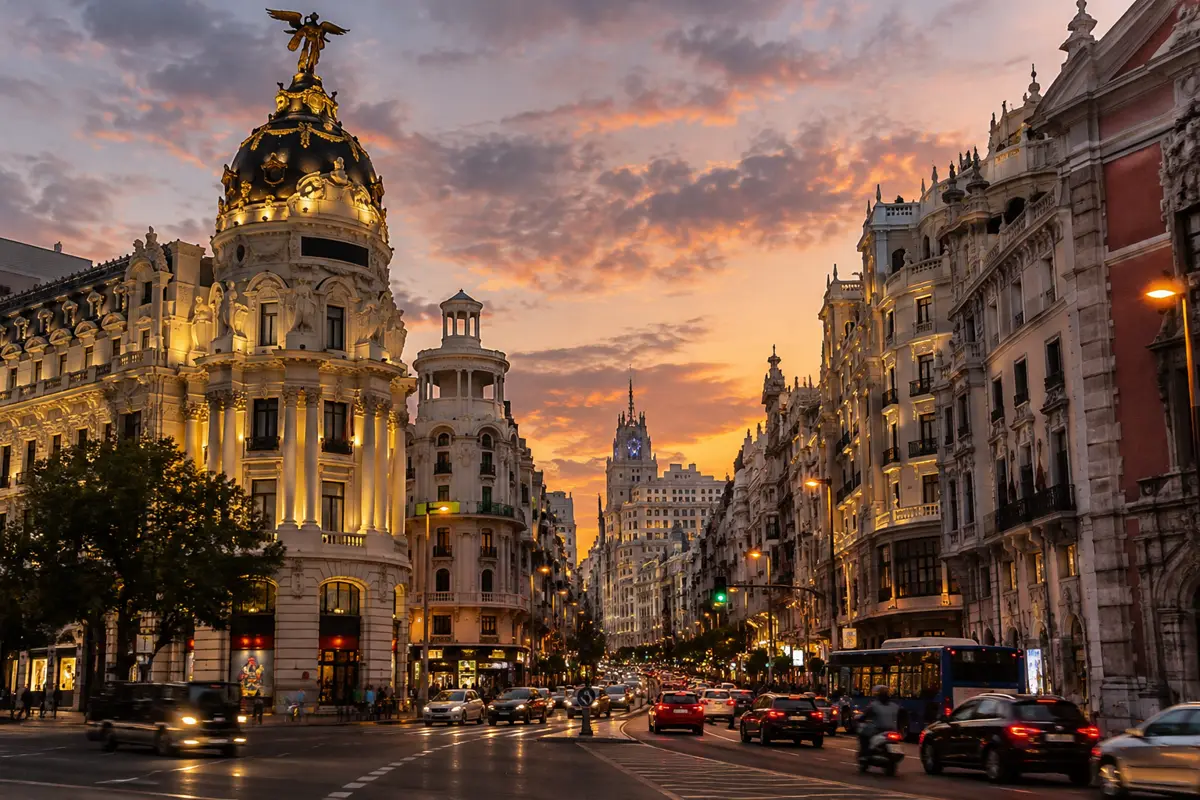
This is Madrid’s classic centre, around Puerta del Sol, Gran Vía and the surrounding shopping and theatre streets. There is a wide range of hotels here, from simple city stays to larger properties in restored buildings. The main advantage is convenience, while the trade-off is noise, crowds and less of a neighbourhood feel on the busiest streets.

2Barrio de las Letras (Huertas)

Between Sol, Plaza de Santa Ana and the museum district, this area mixes literary history with tapas bars and walkable side streets. It is a strong choice if the Prado, Thyssen and Reina Sofía are high on your list. Hotels are often in compact historic buildings, though the busiest nightlife streets can stay noisy late into the evening.

3Malasaña and Chueca

Malasaña and Chueca feel younger and more local than the tourist core, with independent shops, brunch spots, bars and a distinct city rhythm. Stay here if you want to experience Madrid as much as sightsee. Expect smaller rooms, lively evenings and streets where quiet is not guaranteed.

4Salamanca

Salamanca has broad avenues, elegant buildings and a polished residential feel just east of the centre. It is a good fit if you want calm streets, a more classic hotel stay and easy access to restaurants and shops. You give up some old-town atmosphere, but gain comfort and less late-night noise.

5Lavapiés and Embajadores

South of the centre, this mixed district shows a more everyday side of Madrid, with global food, cultural venues and a less polished character. Accommodation here tends to be smaller scale and simpler than in Salamanca or on Gran Vía. It is lively and interesting, but some streets feel rougher and the atmosphere is not everyone’s idea of relaxed late at night.

6Atocha and Retiro

Around Atocha and the southern edge of Retiro, you are well placed for train travel, the major museums and the park. This area works well if you arrive or leave by rail, or want to stay close to the Paseo del Prado. It is less atmospheric than Letras or Malasaña, but very straightforward and convenient.

Getting there

Adolfo Suárez Madrid-Barajas Airport lies northeast of the city and has four terminals. You can reach the centre by metro line 8, by Cercanías train from Terminal 4 or by the airport express bus. A taxi is convenient if you have a lot of luggage. For rail arrivals, Atocha and Chamartín are the main stations: Atocha for many high-speed services towards places such as Barcelona and Andalusia, Chamartín for many routes to the north.

Getting around

Madrid is easiest to get around by metro, bus and Cercanías suburban rail. The centre is compact enough that you can do a lot on foot, especially between Sol, the museum triangle and Retiro. A car is usually more trouble than it is worth because traffic is heavy and parking can be awkward. If you do drive, choose somewhere with parking and remember that inward-facing rooms are often quieter.

When to go

The most comfortable months are usually April, May, June, September and October, when the weather is often sunny without the fiercest heat. July and August can be very hot, which makes midday sightseeing more tiring. Easter is a busier period, and the run-up to Christmas also draws crowds. In May, the San Isidro celebrations add extra atmosphere across the city.

What not to miss in Madrid

Museo del Prado

The Prado is one of Europe’s great art museums, especially strong in Spanish masters such as Velázquez and Goya, alongside Flemish and Italian works. Allow several hours if art is a priority.

Museo Reina Sofía

Spain’s national museum of modern art is best known for Picasso’s Guernica. It also holds major works by Dalí, Miró and other twentieth-century Spanish artists.

Museo Nacional Thyssen-Bornemisza

The Thyssen complements the Prado and Reina Sofía with a broad collection spanning old masters to more modern movements. It is ideal if you want the fullest possible museum view of Madrid.

Parque del Retiro

Retiro is Madrid’s great central park, useful for shade, a walk and a break from the pace of the centre. Highlights include the lake, the Palacio de Cristal and wide tree-lined paths.

Palacio Real

The Royal Palace is one of the city’s most striking landmarks and sits near the historic core. Even if you do not go inside, the surrounding squares and viewpoints are worth the walk.

Plaza Mayor

This enclosed square belongs to historic Madrid and lies a short walk from Sol. It is touristy, but still a standard stop on a first visit for its architecture and setting.

Practical tips for your hotel in Madrid

  • Unlike Barcelona, Madrid has no tourist tax, but always check your hotel's conditions for any extra charges.
  • Book popular museums ahead if your time is limited, especially for weekends and holiday periods. It saves waiting around.
  • People eat late in Madrid. If you want an early dinner, check whether restaurants are already serving, or stay in busier areas such as Sol, Gran Vía or Chueca.
  • Check the room location before booking. Rooms on Gran Vía, around Sol or above bars are convenient but can be noisy, while courtyard-facing rooms are usually quieter.
  • Plugs are the standard European type C and F. Contactless payment is widely accepted, though carrying a little cash can still be useful for small purchases.

Search Madrid live

cyah searches live availability. Click an example or type your own request with dates and number of travellers.

FAQ about Madrid

Which area is best to stay in Madrid?

For a first trip, Sol and Barrio de las Letras are the easiest because many major sights are within walking distance. If you want more calm and comfort, choose Salamanca. For cafés and nightlife, Malasaña and Chueca are a better fit.

How do I get from Barajas to central Madrid?

You can use metro line 8, the Cercanías train from Terminal 4, the airport express bus or a taxi. The best option depends mostly on which terminal you use and where your hotel is.

Can cyah show the cheapest hotels in Madrid?

Cyah searches live hotel availability worldwide and you can filter by budget, stars, breakfast, parking, pool and free cancellation. Ask for example: cheapest hotels in Madrid from 5 to 7 December.

How many days do you need in Madrid?

Two full days are enough for the main sights plus a museum or park. Three days feels more relaxed if you also want time for long meals, shopping and a second or third museum.

Is it a good idea to stay near Atocha?

Yes, especially if you are continuing by train or want easy access to the museum triangle. For classic evening atmosphere and lots of bars, Sol, Letras or Malasaña usually feel livelier.

Where should you stay in Madrid with children?

Retiro, Atocha and parts of Salamanca are often practical because streets are wider and quieter and the park is close by. Avoid the loudest stretches of Sol and nightlife-heavy streets in Malasaña or Huertas if light sleep matters.

Other destinations: Amsterdam · Barcelona · Lisbon · Paris · Rome · London · Istanbul · New York · Vienna · Paramaribo · Athens · The Hague · Edinburgh · Florence · Lyon · Maastricht · Málaga · Miami · Milan · Nice · Porto · Rotterdam · Salzburg · Seville · Utrecht · Valencia · Venice