1Covent Garden and the West End
This is classic London city-break territory, with theatres, shops, restaurants and famous streets all around you. Hotels here tend to be compact city properties and smart addresses in historic buildings. The big advantage is doing a lot on foot, while the trade-off is constant bustle and some street noise.
2South Bank
South Bank runs along the Thames and mixes skyline views, cultural venues and modern hotels. You can walk to the London Eye and Tate Modern, and further east to Borough Market, and the riverside promenade gives the area a pleasant sense of space. Some stretches can feel quiet in the evening once day visitors have gone.
3South Kensington
South Kensington feels residential, polished and more traditional, with broad streets and handsome buildings. It is ideal for the Natural History Museum, the V&A and Hyde Park, and hotels are often a bit roomier than in the busiest central districts. The downside is that evenings are less animated than in Soho or Covent Garden.
4King's Cross
King's Cross is a smart pick if you arrive on Eurostar or want strong connections across the city without too many changes. The area has been extensively regenerated, with restaurants, canalside walks and modern hotels around Granary Square. It is less atmospheric than the West End, but one of the most useful bases in London.
5Soho and Fitzrovia
Soho and Fitzrovia suit travellers who want to stay right inside London's energy. You are surrounded by pubs, cocktail bars, small theatres, shops and restaurants from all over the world, with plenty of boutique hotels and compact rooms. It is great fun, but light sleepers should ask for a quieter room away from the street.
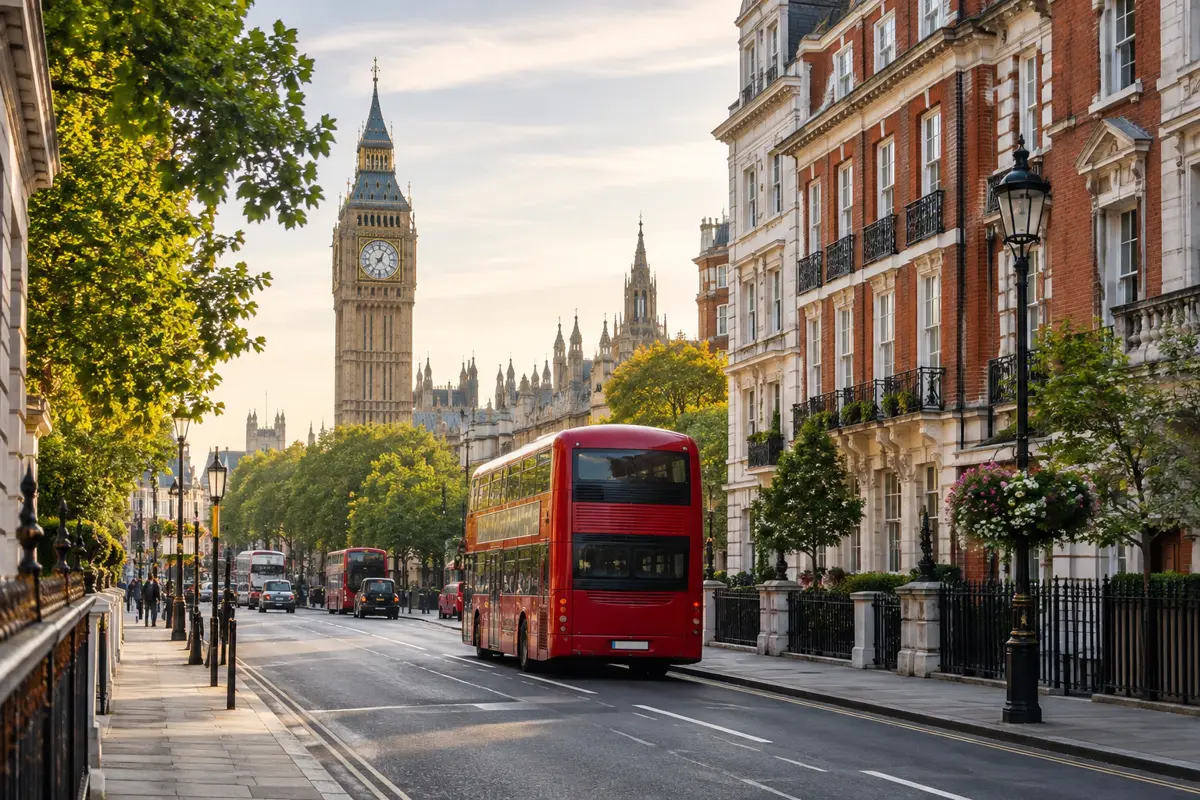
6Westminster and St James's
If you want to be close to Big Ben, Buckingham Palace and St James's Park, this is a strong area. The atmosphere is more formal and quieter than Soho, with a mix of traditional hotels, business hotels and larger properties. At weekends, parts of it can feel surprisingly calm once office workers have gone.